
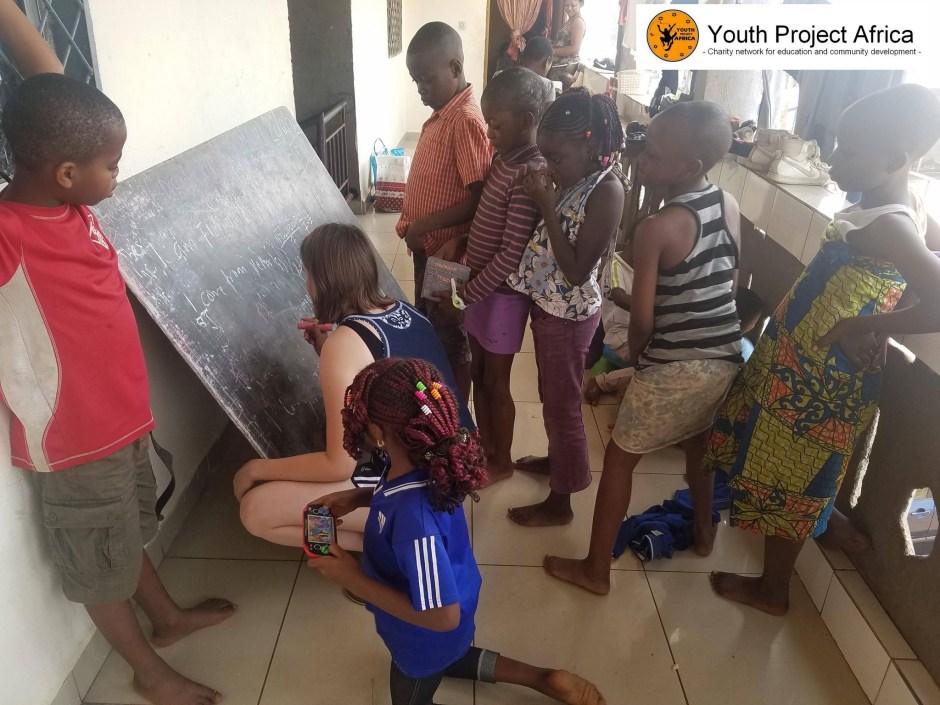
 On a visit to Cameroon during the Christmas Holidays I asked some of my Cameroonian nephews and nieces, aged between 9 and 14, to show me the position of Cameroon on the world map. To my surprise, none of them could do this. They also struggled to name even one neighbouring country (Cameroon has 6 to choose from; Nigeria, Chad, the Central African Republic, the Republic of Congo, Gabon and Equatorial Guinea). Unfortunately and without generalizing, this is the case for most children and even (young) adults that I met during my recent trips to Cameroon. They have no clue of their position in the world, let alone they know how the situation in their country is compared to the situations in other parts of the world. They live their lives with the strong belief that the best thing that can happen to them is to travel out of their own country. They simply do not understand that even if they go to Europe and make more money, their monthly costs and responsibilities will also increase proportionally.
But can we really blame them? I don’t think so. Every person is looking for happiness and a better life after all. What many, especially young Africans do not realise is that for most of them, the best life is in Africa. Nowadays almost every young Cameroonian has a smartphone with internet, but when you inquire about the things they use it for, no one will tell you they use it to study, read or do research.
I see it as my personal mission to educate these young people about the world. To teach them how to investigate news and information that people tell them and most importantly to inspire them to become critical citizens of their countries. I also believe that this goal can be achieved with rapidity and certainty. Not by simply sending children to schools that teach definitions only, but by teaching them how to think independently and showing them how to take charge of their own lives. We have to teach youths that to achieve anything in life, it is in their hands, and not in the hands of their government, their family, or the government of a developed country. We need to teach young Cameroonians and Africans how to make use of the possibilities, opportunities and potentials they already have. And they can start right where they are. They do not have to go to Europe to realise their dreams. Until we do this, migration can never be stopped or controlled because of wrong expectations. Especially not by putting soldiers with guns at the border.
Florine van Meer (florinevanmeer@youthprojectafrica.org)
 Youth Project Africa